
Accountability Lab
Mexico Annual Report
2025
Leaders’ Overview of 2025
Vision, Mission and Values
Vision and Mission
We bridge people and power to strengthen accountability, expand participatory governance, and harness art and collaboration to build more just and responsive institutions.
Values
Throughout 2025, as Accountability Lab advanced its translocal reimagining process, many of the values that are currently being formalized at the network level have been present in how we work. To us, integrity, learning, equity, transparency, and solidarity are a daily practice. We follow through on commitments, name challenges early, share information openly, and treat accountability as a constant discipline, both individually and collectively.
Care sits at the center of how we operationalize these principles, and it can look like self-care, collective care, and shared responsibility. We design processes that amplify voices and acknowledge power differences, facilitate conversations rather than dominate them, and work collegially rather than as lone actors. We continuously learn from communities, partners, and peers and generously share knowledge. In moments of pressure and constraint, we show up for one another and build partnerships, reinforcing trust, ownership, and mutual accountability as the foundation of our work.
Impact & Program highlights
From Community Voice to System Change
CivActs: Building bridges between citizens and institutions
Grounded in Community Priorities
In Yugueltito, a self-governed informal settlement in Iztapalapa, Accountability Lab Mexico continued its work to strengthen community-led accountability and improve access to public resources.
Following a participatory diagnosis conducted in 2024, the focus in 2025 shifted toward supporting residents in engaging with formal participatory democracy mechanisms for the first time.
Through technical trainings and a fully participatory design process, residents worked collectively to define priorities and co-create solutions. This resulted in the development and submission of a “Safe Pathway” proposal to Mexico City’s Participatory Budget mechanism, integrating paving, lighting, and safety infrastructure along a high-risk corridor.
The process strengthened community capacity – equipping residents with tools to organize, engage, and advocate for their needs within formal systems.
At the same time, it surfaced structural barriers that continue to limit access for informal settlements, highlighting the need for more inclusive approaches to participation.
Key Results:
• 3 community assemblies (250–300 participants each)
• 1 training for community coordinators and leaders
• 6 interviews with community leaders
Advancing Institutional Change
The data:
• Nominations: 87
• Men: 22
• Women: 65
• Geographic reach:
Sinaloa (66), Quintana Roo (9), Nuevo León (4), Jalisco (2), Estado de México (2), Puebla (2), Hidalgo (1), Oaxaca (1)
• Integrity Icons recognized: 5
• Jury members: 4
• Total public votes: 11,067
• Integrity Summit participation:
• In-person: 111
• Virtual: 415
Integrity Icon: Strengthening Trust In Challenging Times
Music4change: Using Art To Shift Narratives
Centering Lived Experience Through Creative Expression
In 2025, Music4Change completed its artistic creation phase through a program co-designed with fellows, singer-songwriters, and community practitioners Leiden and Irei Almonte.
Over a three-month period, participants – many of whom are in mobility contexts – engaged in testimonial songwriting, producing four individual songs and one collective piece rooted in lived experience.
The process created a space for participants to reflect on identity, dignity, and rights, particularly within contexts where migrant communities often face stigma, exclusion, and disinformation.
Through storytelling and creative expression, participants were able to articulate personal experiences that are often overlooked in public discourse, strengthening both individual voice and collective narrative.
At its core, Music4Change is grounded in proximity to people – ensuring that lived experience is not only heard, but centered in how narratives around migration and identity are shaped.
The data:
• Total participants: 37
• Distribution by gender:
• Women: 19 (52.8%)
• Men: 15 (41.7%)
• Non binary: 1 (2.8%)
• Other identity: 1 (2.8%)
• Distribution by age group:
• Adults (18+): 16 (44.4%)
• Minors: 20 (55.6%)
• Distribution by country of origin:
• Venezuela: 21 (58.3%)
• Colombia: 7 (19.4%)
• Honduras: 4 (11.1%)
• Chile: 1 (2.8%)
• Panama: 1 (2.8%)
• Ecuador: 1 (2.8%)
• Guatemala: 1 (2.8%)
• Number of participants who reached the final stage of the program and participated fully in the songwriting process: 8
• Total of completed and recorded songs: 5
Shaping Public Narratives and Influencing Systems
While grounded in personal storytelling, Music4Change also engages broader systems of influence – recognizing that narratives shape public perception, policy environments, and access to rights.
A key focus during this phase was the registration of copyright and the protection of patrimonial rights, ensuring that participants retain ownership and control over their creative work. This is particularly significant for migrant artists navigating legal and economic uncertainty.
By supporting participants through this process, the program not only builds creative capacity but also strengthens their position within broader cultural and institutional ecosystems.
The next phase will focus on strategic dissemination and public engagement, using these artistic outputs to challenge harmful narratives, counter disinformation, and influence how migration is understood in public and policy spaces.
Through Music4Change, Accountability Lab Mexico connects personal stories with broader systems – demonstrating how narrative can serve as a powerful tool for advancing inclusion, rights, and accountability.
Strengthening Partnerships And Institutional Engagement
In 2025, Accountability Lab Mexico continued to deepen its engagement with national and subnational institution strengthening collaboration, contributing to policy processes, and advancing accountability through strategic partnerships.
Engaging National Anti-Corruption Leadership
Accountability Lab Mexico was invited to attend the formal inauguration of Vanía Pérez Morales as President of the National Anti-Corruption System (SNA) at the Senate, alongside senior public officials and institutional representatives.
The convening reaffirmed a shared commitment to strengthen anti-corruption efforts through collaboration between government and civil society. This engagement forms part of Accountability Lab Mexico’s ongoing work with national accountability institutions and informed the strategic direction of the 2025 Integrity Icon campaign.
Advancing Open Government at the State Level
Accountability Lab Mexico participated in the Civil Society Organizations Core Group (Núcleo de Organizaciones de la Sociedad Civil, NOSC) within the Open Government Partnership (OGP) Local framework during the co-creation of Nuevo León’s second Open Government Action Plan.
This process brought together state authorities, municipal governments, transparency institutions, and civil society organizations to jointly define and advance open governance commitments.
Through NOSC, civil society actors provided feedback, accompanied specific commitments, and contributed to strengthening transparency, access to information, and participatory governance at the state level.
Contributing to Legislative Reform Processes
Accountability Lab Mexico was invited to participate in the First National Dialogue on Strengthening the Legislative Branch, a co-creation process convened by Borde Político and Práctica Lab at the Congress of the Union.
As part of the working group on Citizen Engagement and Open Parliament, we contributed alongside civil society and academic partners, presenting concrete proposals to strengthen:
• public hearings
• structured consultations
• transparent citizen initiatives
These contributions were incorporated into the consolidated reform proposal, advancing dialogue toward a more open and accountable legislative branch.
Building New Pathways for Government–Civil Society Collaboration
Accountability Lab Mexico also participated in the inaugural “Open Dialogue with Civil Society Organizations”, convened by the newly established Secretariat of Anti-Corruption and Good Government.
Held in a small-group format with approximately ten organizations, the meeting aimed to strengthen structured collaboration between government and civil society on accountability and governance.
Following this exchange, thematic working groups were established on:
• access to information
• digital citizenship
• integrity
• open government
• civic engagement
These groups will begin operating in 2026, positioning Accountability Lab Mexico and its partners as active contributors to shaping the next phase of national anti-corruption policy.
Building And Connecting The Accountability Ecosystem
In 2025, Accountability Lab Mexico continued to invest in the broader accountability ecosystem—supporting community actors, engaging in regional and global networks, and contributing to collective efforts that advance transparency, civic participation, and democratic resilience.
This initiative was implemented by Accountability Lab in partnership with Development Gateway (an IREX Venture) and the Open Data Charter.
Contributing to Regional Digital Democracy Efforts
Following participation in the 2024 co-design process under the Digital Democracy Initiative (DDI), these efforts evolved into DemocratiCAs, a regional program supporting pro-democracy initiatives across Latin America and the Caribbean through funding, digital strengthening, and community-building.
Accountability Lab Mexico is part of the expert network and broader DemocratiCA community, contributing to regional strategies that protect human rights and expand civic space in digital environments.
In this capacity, Ana Lozano, Co-Lead and Director of Strategy and Advocacy, served as a mentor at FITS+Conexiones Bienestar Digital, organized by Wingu. The convening brought together actors from academia, government, media, business, and civil society to support projects addressing:
• digital well-being
• cybersecurity
• AI and algorithmic impact
• the defense of digital civic space
This engagement positions Accountability Lab Mexico within regional conversations on responsible technology and democratic resilience.
Engaging Philanthropy and Cross-Sector Networks
Accountability Lab Mexico has continued its engagement with the Mexican Center for Philanthropy (CEMEFI), one of the country’s leading organizations advancing philanthropy and corporate social responsibility.
Through participation in convenings such as the Citizen Collaboration Forum, and as part of the Foundational Circle, the Lab tested CEMEFI’s Encauza platform and provided feedback – while connecting with a broader network of civil society and private sector actors.
This engagement expands Accountability Lab Mexico’s presence within national ecosystem spaces and supports relationship-building beyond traditional governance networks.
Supporting Civic Oversight and Electoral Transparency
In December, Accountability Lab Mexico formally joined the Observation Network of the Mexico City Electoral Institute (IECM)—a platform that brings together civil society organizations and citizen observers to monitor electoral processes, participatory democracy mechanisms, and institutional performance.
Membership includes participation in technical working groups, exchange sessions, and specialized training that support professional civic oversight.
Through this engagement, Accountability Lab Mexico contributes to transparency, institutional accountability, and citizen participation in Mexico City’s democratic processes.
Media, Digital Engagement,and Public Visibility
In 2025, Accountability Lab Mexico expanded its public presence across both media and digital platforms – amplifying key initiatives, increasing visibility, and connecting broader audiences to conversations on accountability, governance, and civic participation.
Through a more intentional communications approach, the Lab translated complex governance issues into accessible and engaging narratives, ensuring that community-led efforts and institutional engagement reached and resonated with more diverse audiences.
They are requesting a “Safe Path” in Yugueltito, Iztapalapa
Media Coverage and Public Visibility
Accountability Lab Mexico’s work received media attention across national and regional outlets, highlighting both community-driven initiatives and institutional engagement.
The Safe Pathway project in Yugueltito gained visibility following the introduction of a formal motion in Congress by Congresswoman Valeria Cruz, with coverage emphasizing the role of community-led solutions in shaping public policy.
The Integrity Icon campaign was also widely featured, showcasing public servants advancing transparency and accountability across Mexico. Coverage highlighted the work of finalists and winners, reinforcing public recognition of ethical leadership within government.
Featured in:
Congreso CDMX · OEM Noticias · Línea Directa · Noroeste · Satélite Online · Olegario
Digital Reach and Engagement
Accountability Lab Mexico also expanded its digital footprint, using social media to deepen engagement and extend the reach of its work.
Media Coverage
Key Articles
CivActs & the Safe Pathway project
Valeria Cruz, a local Congresswoman, introduced a formal motion in Congress to implement the “Safe Pathway” project in Yuguelito.
Integrity Icon
Itzé & Víctor Manuel
Itzé Coronel Salomón
Víctor Manuel Gallardo Barraza
Platform Highlights
- Primary visibility driver (78% of total reach).
- Achieved a strong 9.46% engagement rate, significantly above average benchmarks.
- Instagram Stories emerged as a high-performing format.
- Highest relative follower growth (+454%), reflecting successful positioning among professional and governance-focused audiences.
- Strong performance of impact-driven and partnership content.
- Event-related posts generated higher share rates.
Top Content Insights
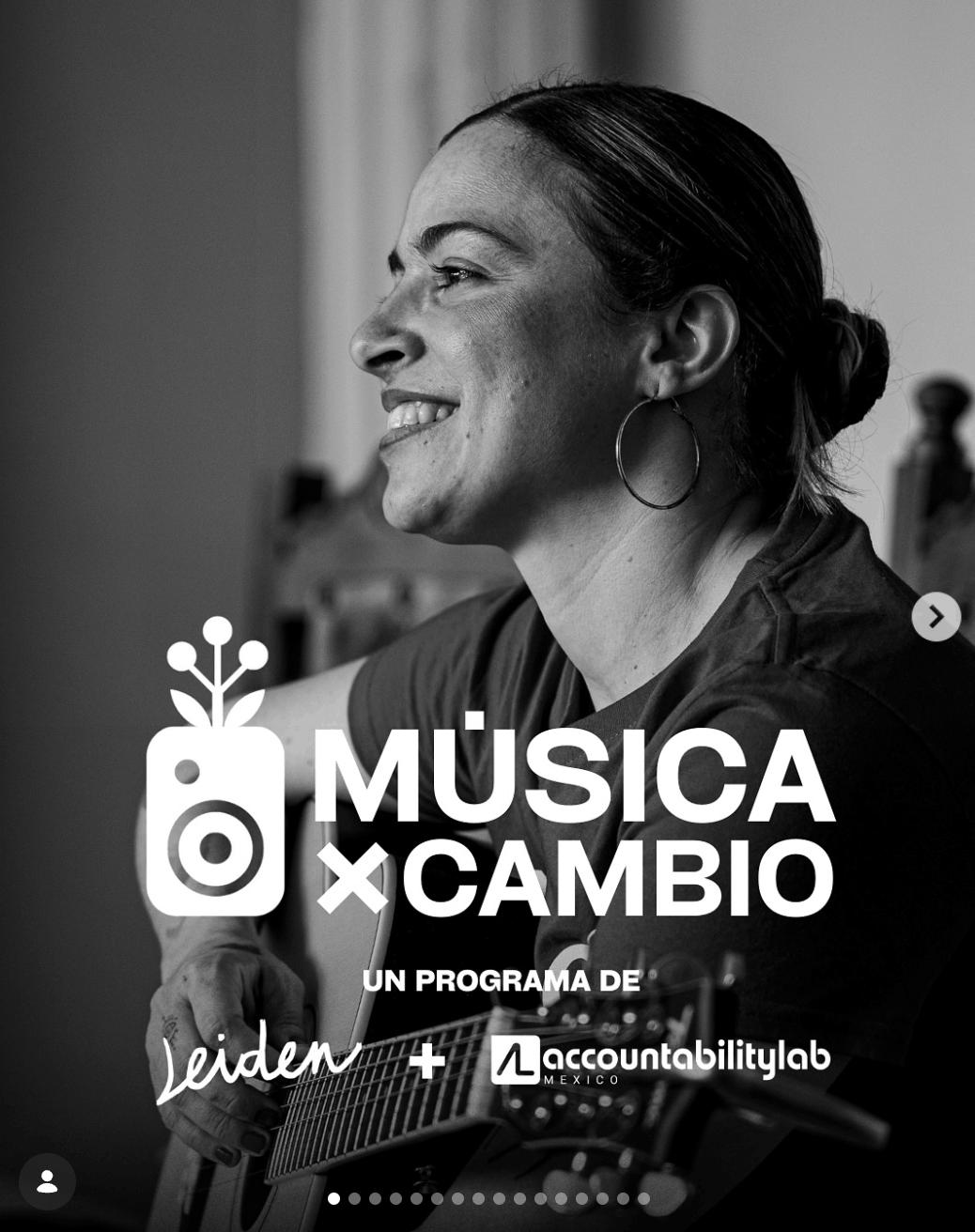
Best-performing post: “Desde la Casa del Migrante Arcángel Rafael, lanzamos el primer piloto de Música X Cambio.” – “From Casa del Migrante Arcángel Rafael, we launched the first pilot of Music4Change.”
-
- Topic: Music4Change Launch
- Format: Carousel Post/Photo dump
- Impressions: 11,619
High-performing content consistently included:
• Story-driven narratives
• Clear, educational formats
• Strategic partnerships for amplification
Key Takeaways
- Instagram is consolidating as the main awareness and engagement channel.
- LinkedIn shows strong strategic growth potential despite a smaller base size.
- Strategic collaboration with higher-reach partner accounts expands visibility beyond our core audience.
Staff/Board
Ingrid Lowenberg
Operations & Programs Director + Country Co-Lead
Ana Laura Lozano
Strategy & Advocacy Director + Country Co-Lead
Sebastián Marín
Communications Officer
Karla Luna
Civic Engagement & Advocacy Officer
Leiden Gomis
Music4Change Fellow (From Aug to Dec 2025)
Blanca Aguerre
Programs Associate (From Feb to Dec 2025)
In 2025, Accountability Lab Mexico continued to grow its team and leadership structure, strengthening its ability to deliver impactful programming and engage across both community and institutional spaces.
Ingrid Lowenberg (Operations & Programs Director) and Ana Laura Lozano (Strategy & Advocacy Director) assumed their roles as Country Co-Leads, guiding the Lab’s strategic direction and programmatic work.
The team expanded throughout the year:
• Sebastián Marín joined as Communications Officer, supporting storytelling and public engagement
• Blanca Aguerre joined as Programs Associate (February–December 2025)
• Leiden Gomis contributed as Music4Change Fellow (August–December 2025)
• Karla Luna joined as Civic Engagement & Advocacy Officer, strengthening the Lab’s work on participatory governance and institutional engagement
Together, the team brings a diverse range of skills across governance, advocacy, communications, and creative programming — allowing Accountability Lab Mexico to remain responsive, collaborative, and grounded in its values.
Budget Highlights
In 2025, Accountability Lab Mexico maintained a focused and adaptive approach to resource management within a changing funding landscape.
Resources were allocated to support core programming, team capacity, and strategic partnerships — ensuring alignment between financial planning and programmatic impact.