Author: Sheena Adams | Share
It’s 2020…And We Have a New Strategy for Building Accountability Around the World!
Happy New Year! And we hope 2020 is off to a great start for you and your organization – with ambitious goals, renewed energy and exciting plans. Here at the Accountability Lab we’ve begun the new year with two big changes. At the end of this month we’ll be launching a brand-new website for the Lab, which we hope you like. We feel it is a big step towards better creating the right kind of narrative around accountability; and will be much more user friendly for people like you who might like to know more about what we do and how we do it. However, in the first big change, we’re happy to release our new 2020-2023 strategy today! By Blair Glencorse.
It is a new framework that will guide our efforts over the next three years. This builds on our previous strategy and has been a labor of love over the past year or so – with inputs from our teams, a strategic retreat, deep engagement from our Board of Directors, feedback from peers and partner organizations and more. Look out for a blog on strategy as a process rather than an output coming soon. In the past 8 years we learned a huge amount that has informed this new strategy – for example, the need for:- Positivity not Negativity – “naming and faming” rather than “naming and shaming” and lifting people up to support solutions wherever we can;
- Individuals then Organizations – through a focus on accountability agents, as well as accountability organizations or actions;
- Unlikely Networks not just Usual Suspects – efforts to bring different kinds of citizens into this work across civil society, government, musicians, creatives, technologists, film-makers and others;
- Inside Out not just Outside In – through deeper support for reformers inside government – connecting them to each other and to those outside government to work together for reforms;
- Bottom Up and Top Down – supporting new ideas and energy from the grassroots and the “grasstops” to shift the way decisions are made;
- Them not Us – through creating the space for others, collaborating in meaningful ways, crowding in other people and ideas, leading from behind where we can and acting as a facilitator of change;
- Partnerships not Isolated Actions – through mapping where others intervene and link our efforts to those that are working at different points in accountability systems to amplify change;
- Long-term Efforts not Quick-Fixes – by building trust in communities and deep networks that can provide the basis for sustained engagement over time.
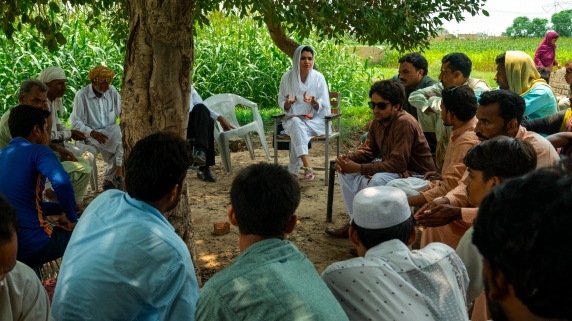
- A focus on shifting norms and changing behaviors – in particular through creative, positive campaigns such as Integrity Icon, which we will grow into a global effort to generate conversations and actions around integrity and shift the way publics understand norms related to issues of accountability. We will also grow our work around music as a tool to shift thinking among citizens and build out our visual storytelling work, using film to engage communities in conversations and actions on governance issues;
- Equipping reformers for collective action – through building knowledge among change-makers within government, civil society and the private sector. This will build on our work for the past 8 years building out our Accountability Incubator, Innovation Challenges, Integrity Innovation Labs and other efforts that have built skills, ideas and networks for change. This also means leading and supporting the creative spaces, such as OpenGov Hubs, through which this knowledge and these “unlikely networks” can be created.
- Influencing policies, processes and practices – at the local, national and international levels through building communities that can shift power. We have both excellent networks in communities and access to rooms where policy decisions are made – and we want to make sure we use these together and effectively. We will also work through our Civic Action Teams to better integrate the idea of citizen feedback into development and ensure people’s voices are used to inform decision-making.
Related Content
From Our Library
Subscribe
Join our community
Subscribe for updates on new programs, stories of change, and upcoming events from across our global, translocal network.