Civic Action Teams
Over the years, we’ve found that citizens and communities are rarely consulted about the decisions that affect their lives, particularly in hard-to-reach places. Where information is collected from them, the process is extractive, with very little feedback on how this data is used. Systemic corruption, opacity, discrimination or mismanagement by local governments and companies often prevents people from making their voices heard on issues they care about. Where trust in authority is low, rumours and misinformation can create negative feedback loops that further divide communities.
At the same time, power-holders in the public and the private sectors often lack the information they need to make decisions effectively and the channels to engage with their constituencies in meaningful ways. All of which undermines development, fuels conflict and prevents progress towards the SDGs.


The Solution
Communities select volunteers called Community Frontline Associates (CFA) and with the support of local journalists, they act as two-way information collection and dissemination units. The CFAs gather information on critical problems affecting their communities on a monthly basis through community surveys. They then relay this information to our teams at the Lab to coordinate with local and national power holders. Our Civic Action Teams (CivActs) build accountability into local decision making in real-time, and close the feedback loop between citizens, governments, the media and the private sector.
AL East and Southern Africa has worked on strategic Beneficial Ownership Transparency (BOT) reforms in Zambia and Kenya, in partnership with Open Ownership and the End Snow Washing Coalition. This led to increased CSO understanding of legal and technical BOT provisions, strengthened civil society and media literacy, practical engagement strategies at the local level, and improved coordination between government agencies and non-state actors.
In Nigeria, the team convened government officials, civil society partners, and community members in Oyo and Ogun States, to co-design practical solutions that ensure procurement funds reach the people they are meant to serve. Participants examined real budget lines and audit reports, tracing the utilization of funds and identifying practical solutions.
The Scale & Scope
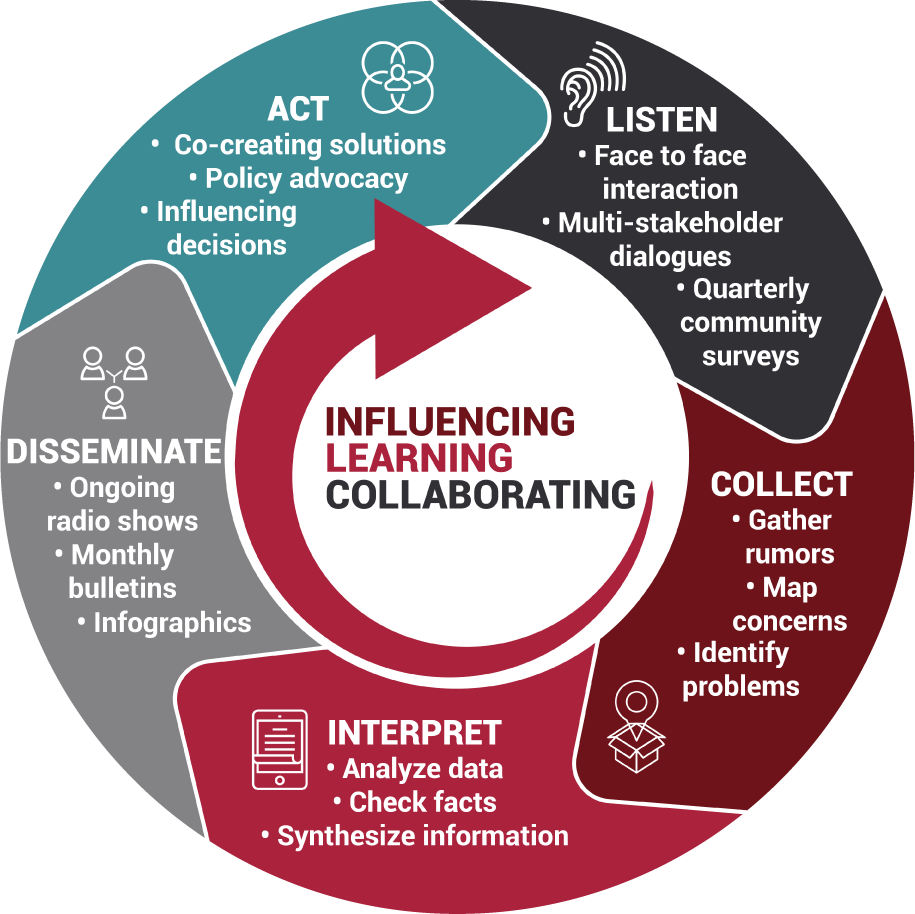
The CivActs process is circular, with the feedback loop building trust as it evolves. Adaptive learning is at the center of the model, with this learning used to improve the process in real-time.
CivActs is a platform which allows for deep collaboration with other organizations that have expertise around local issues. This allows them to be adapted and contextualized to build collective trust from the bottom up.
The Feedback Loop
The CivActs process is circular, with the feedback loop building trust as it evolves. Adaptive learning is at the center of the model, with this learning used to improve the process in real-time.
CivActs is a platform which allows for deep collaboration with other organizations that have expertise around local issues. This allows them to be adapted and contextualized to build collective trust from the bottom up.
Related Content
From Our Library
Subscribe
Join our community
Subscribe for updates on new programs, stories of change, and upcoming events from across our global, translocal network.