Author: McDonald Lewanika | Share
Strategies for sustainable democracy, rights and governance work
We may not be in a pandemic like COVID-19, but civil society is traversing unprecedented territory and managing a tone of change. The shrinking civic space and receding funding base globally constitute a moment of crisis and introduce a complexity into the context that will affect us for a long while. Complexity is the new normal within which we lead and live, and as long as we do not bury our heads in the sand or continuously lament, we can challenge ourselves to intentionally engage the context, accepting that moments of crisis are also moments of opportunity, which we can grab if we intentionally attempt engagement and redress of the situation in the full knowledge that the world we had is not returning. This reality challenges us to rethink the moment, rethink our ways of organising and organisation, and rethink how we convene, how we find each other and how we build shared understanding. This is not an easy task. The spaces where we convene are now fewer, and yet the work of accountability, promotion, respect, and upholding of human rights, and democratisation has not paused. The challenges are not waiting for our budgets to recover, our human resources to be adequate, and our contexts to improve to be adequate. The temptation, for most of us in civil society, is to think about how we survive this “crunch”; while this is a secondary question, the answer lies, in fair measure, in how we operate differently in ways that ensure human progress beyond projects.
A shared vision for shared action
The level of institutional and contextual complexity we’re dealing with means that no single organisation, donor, or government can claim a full understanding of the context in which we’re operating. To fully understand our context, we need to see, review, and analyse it together, accepting the multicausal nature of our challenges and the poly-nature of the actors involved in perpetuating them, but also required to address some of today’s biggest questions.
Much of the progress required to engage with our contexts starts with us talking more to each other, especially across space, sectors, and issues of interest. If we indeed want to see our context in full, we must see it together. Sitting where I am, I have a certain perspective on what is happening in the civic space, but I may have a blind spot that someone elsewhere would see (differently). From a disciplinary perspective, there are things I see as a political scientist interested in governance, which are impacted in ways that I don’t see or, if I see, do not understand in the technology space, or the food security, energy or trade space. By building the puzzle of our collective perspectives, we have a more complete picture to address some of the collective action problems that confront us in this dynamic, complex, context.
Seeing the terrain together, in our diversity, before we talk about how to act together,allows us to develope a shared understanding and consciousness. It helps us avoid retreating into our own silos to plan individual interventions, which while exciting, will do very little to address the challenges we face. The reduction and disparate nature of convening spaces, is therefore not a minor inconvenience. It is the manifestation of a sector in retreat, and actors engaging in survavalist actions in an uncoordinated, and therefore ineffectual fashion. Here, we have some lessons to learn from the COVID 19 pandemic period. At that point, we were challenged to innovate how to continue doing the work, convening, sharing ideas, seeing the situation together, in ways that allowed us to coast past the pandemic. The challenge may be different, but some of the tools we leveraged during COVID, when we had to find each other virtually because we had no choice, need to be brought back deliberately, not as an emergency improvisation, but as standard practice for an ecosystem that can no longer assume it will always have the travel budget to meet face to face, in person.
This is also where we need to embrace the equifinal nature of the our challenges, and also the equifinality of the actions required to address the situation– the idea that a single, identical end state or outcome can be achieved through multiple different initial conditions or diverse pathways. In this context, we can recognise that political phenomena are multicausal, and that the same outcome can arise from different combinations of conditions in different places. Once we accept that the challenges we face are multi-dimensional in this way, it follows that no single actor, discipline, or geography can diagnose them alone. They require an interdisciplinary and multi-actor approach as a matter of design, not generosity, necessity, not accomodation.
Leverage the lessons we’ve learnt more meaningfully
We have spent a lot of time reflecting on outcomes, such as how youth protests stopped the passage of the Finance Bill in Kenya and toppled a government in Nepal. While we admire the outcomes, we neglect the reality that those moments were not spontaneous, and were preceded by a lot of organising. In Kenya, long before the Finance Bill protests, there were anti-femicide demonstrations during which women’s groups organised and built trust with each other on other issues entirely, before ultimately joining hands with other movements when the moment required it. There is no replacement for that kind of organising and trust-building at the community level. It is slow, unglamorous, and rarely shows up in a results framework, but it is the actual infrastructure that makes mobilisation possible when the moment comes. We lose it, when we just marvel at outcomes, without seeking to understand methods, and attempting replication, because the outcomes show us what now works. Contexts, especially across space will differ, but there are new ways of organising that are proving to be universally aopporopriate, and can be replicated. If we accept that we need to embrace a diversity of perspectives in understanding the context, we should also add that we need to be open to the new lessons and ways of organising that the new movements are offering.
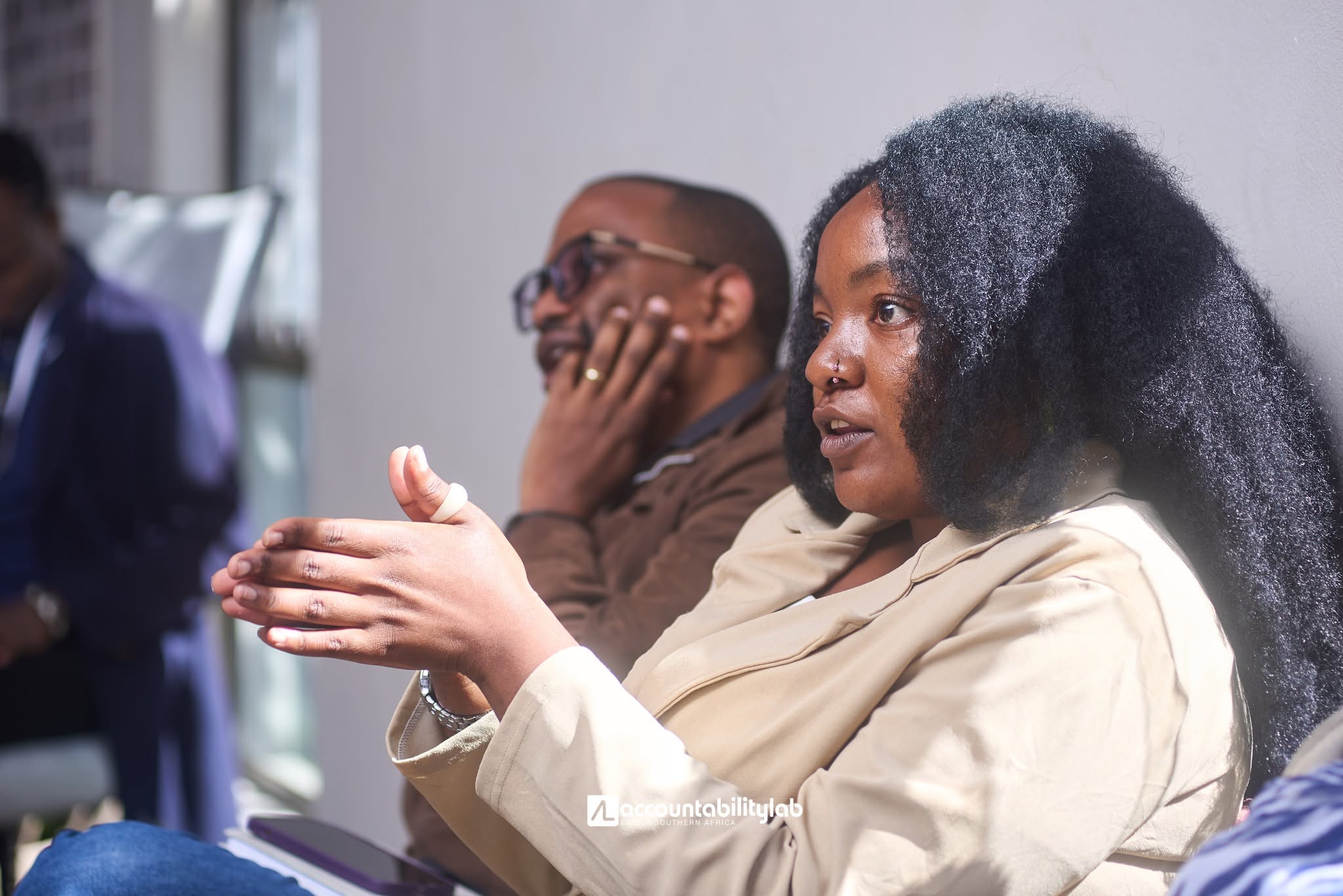
Part of how we do the above is by being strategic about timing, embracing opportunity and mastering the art of doing more than one thing at a time. We recently ran a bootcamp for changemakers from East and Southern Africa in Kenya, deliberately timed to coincide with the Global Democracy Africa Forum 2026 so participants could plug into that ecosystem, as well as participate in the Bootcamp, and at least two other processes. As part of the bootcamp, they were sent on a mission at the Forum to identify three threats to democracy, two promising solutions, and one concept they could apply immediately to their own work. We moved them from the high-level global forum down to the gritty reality of human rights and civic engagement on the ground, and closed with a hard commitment circle, each person naming the accountability change they would personally champion. We were able to leverage ideas and information on the context and how others were dealing with challenges from the forum in ways that influenced our bootcamp participants’ work, which was a practical step to learning across organisations, borders, and the ecosystem.
Approaching technology with a digital native attitude
When young people in Nepal used Discord – primarily a gaming platform – it was not just to organise and mobilise, but to begin modelling an alternative form of governance that has fed into the political changes we have seen since. Young people in Kenya demonstrated the same. They felt they did not have space or were under-represented in political institutions and civil society, so they organised themselves online, and President William Ruto of Kenya was pushed to engage in a much broader town hall than he ordinarily would, because it took place online on a Twitter space. Things like that change how we view and do politics. We are accustomed to political leaders announcing rallies, speaking at us, and then leaving without meaningful exchange. What was being modelled in Kenya was a different way of engaging with citizens in a meaningful way on platforms that a lot of people had access to beyond physical spaces. Civil society and funders alike need to take this seriously as a model to learn from, not as a youth curiosity to observe from a distance.
Activism itself is changing, and as much as we lament the dearth of resources, especially financial ones, this way of organising has mobilised many who might not have been typical participants. During the Gen Z demonstrations, doctors and nurses volunteered to treat the injured, people with large social media followings amplified the protests to broader audiences, and lawyers offered pro bono services to those arrested. This is a democratisation of civic activism happening in real time, at the very moment that many states are trying to narrow the space for exactly this kind of engagement. The lesson for us is that sustainability does not only mean more grant money. It also means building the muscle to mobilise non-financial solidarity such as skills, competence and time, at scale, from unusual sources.
Globalised solidarity to face globalised power
Part of sustaining this work long-term means being honest about the terrain we are organising in. The state infrastructure we rely on was built at Westphalia, at a time (1648) when the world was different. This might be why we are struggling with the regulation of AI or technology in general, because the state infrastructure that we are using was developed at a time when these technologies were unimaginable.
In this vacuum of governance, the rules of the game are being dictated – across borders – by people that no one elected. Over the last decade, private capital has gained an inordinate amount of influence and power. This phenomenon, which former Finance Minister of Greece Yanis Varoufakis calls Technofeudalism, needs to be confronted. The vast power that tech companies, in particular, have accumulated is based on private enterprise, but the social contract between the people and those who govern does not exist under private capital.
If we do not push for AI to be treated as a commons and for public representatives who are not captured by private capital, we are setting ourselves up for a dystopian arrangement in which people who prioritise profit over people decide what is good for the world. Holding our public representatives accountable – because they are the ones with the regulatory power to discipline private capital – must be part of how we think about sustaining democratic gains, not a separate conversation from funding and programming.
We need to ensure that what is being done at the global governance level is good for people. We need to confront these emerging autocracies, especially tech billionaires and their companies, who are taking from us much more than they are giving back.
What this means in practice
What we are experiencing now is not a series of conversations about reimagining democracy. Imagination is already taking place in practice, on Discord servers, Twitter Spaces, and pro bono legal networks.
Young people are already operating in parallel to the traditional structures of participation and governance that civil society and funders have spent decades investing in. There is a very real likelihood that civil society and their donors are resisting change because of the sunk costs fallacy. We may be tempted to read what young people are doing as rebellion against orthodoxy, or raging against the machine. It might be, but a more likely read is that it is a beta test of future governance and organising. Twenty years from now, these young people will be in governance, and the unorthodox methods they are prototyping today are the ones they will carry with them.
While we might not be able to fathom it, the future of democracy is already here. The work of civil society and those who support it is to build the kind of institutions, relationships, and habits that can keep pace with it.
Related Content
From Our Library
Subscribe
Join our community
Subscribe for updates on new programs, stories of change, and upcoming events from across our global, translocal network.