Author: Naseera Noor-Mahomed | Share
What stays human? AI, accountability and the choices facing civil society
As AI becomes part of civil society’s work, where can it help, which decisions should stay in human hands, and who answers when something goes wrong?
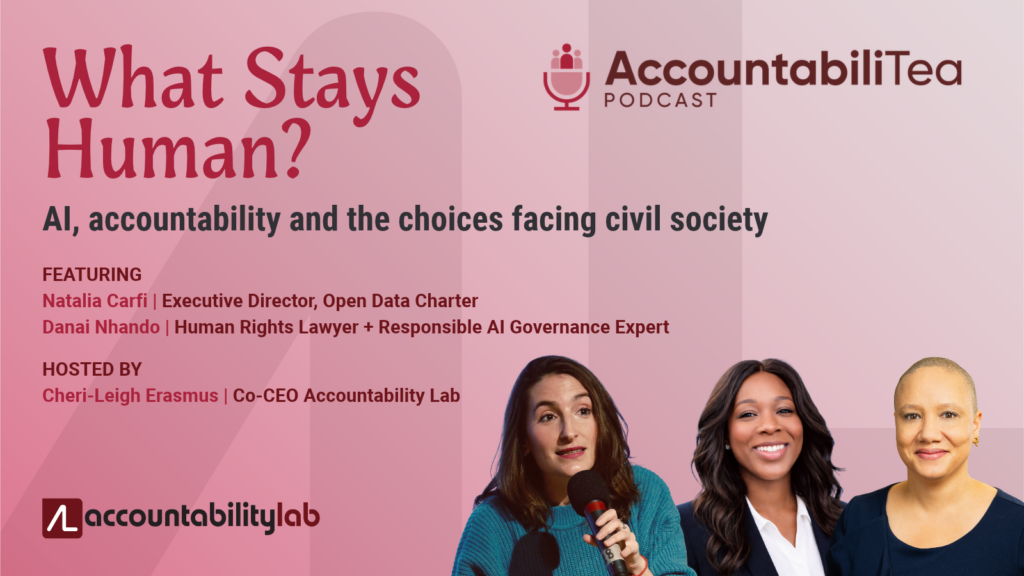
In this episode of the AccountabiliTea Podcast, Accountability Lab Co-CEO Cheri-Leigh Erasmus speaks with Danai Nhando, a human rights lawyer and responsible AI governance expert, and Natalia Carfi, Executive Director of the Open Data Charter, about what responsible AI use looks like in practice.
From grantmaking and recruitment to agricultural projects in Africa and Latin America, the conversation explores what AI can miss about the people and places it’s used to make decisions about. Together, they consider how organizations can protect sensitive information, be open about where they use AI, and agree on safeguards that give people a way to raise concerns and seek a remedy when harm occurs.
Five questions worth sitting with
1. Do people know how their data is being used?
People may share personal information to access food, shelter, or other support without knowing how that information might be used later. How can organizations make sure people understand and have a real choice about what happens to their data, especially when they depend on those services?
2. Does the data reflect local realities?
Natalia points to agricultural AI projects in Africa and Latin America that used data from the Global North that didn’t reflect the crops they were working with. How can organizations build datasets that better reflect local conditions and take care in how that information is collected, shared, and used?
3. When every proposal sounds good, what stands out?
AI can help produce polished grant applications that sound increasingly alike. What can funders look for beyond the writing to understand how an organization thinks about the problem, what it knows about the communities it works with, and how it plans to respond?
4. If an AI-supported decision causes harm, who answers?
Sensitive information can be put at risk through the tools organizations use and the partners they share data with. If a decision informed by AI harms someone, who takes responsibility, and where can the person affected go to raise a concern or seek a remedy?
5. Which decisions should remain in human hands?
Recruitment and organizational strategy involve judgments about people, priorities, and the future of the work. Where can AI help a team weigh its options, and where does the team need to exercise its own judgment?
Listen, watch, or read
Explore the full conversation in the format that works best for you: listen here or on Spotify and Apple Podcasts, watch the episode on YouTube, or read the complete transcript.
Episode produced by Naseera Noor-Mahomed, Global Communications and Marketing Manager at Accountability Lab.
Related Content
From Our Library
Subscribe
Join our community
Subscribe for updates on new programs, stories of change, and upcoming events from across our global, translocal network.